


Looking over a steakhouse menu can get overwhelming fast. Every steak brings something different to the table: some are lean and super tender with a mild flavor, while others are fattier and much richer. The easiest way to pick the right one is to think about what you actually enjoy. Do you want something tender and rich, or something leaner? What doneness do you like? Even the sides matter more than most people realize.
To make things easier, I’ve put together a simple guide to help you pick the right steak at a restaurant so you get the best possible experience.
1. Choose the Right Cut of Steak

Stick to the most popular cuts. These are the steaks you’ll find in almost every restaurant, and they’re popular for a reason. They’re consistent, high-quality, and hard to go wrong with as long as you choose something that fits your preferences.
Think of these cuts as the kings of the steakhouse:
Ribeye Steak

One of the most popular cuts worldwide. Ribeye is highly marbled, very tender, and full of rich flavor. It’s a high-quality cut and a great choice for any occasion.
Filet Mignon (Tenderloin Steak)
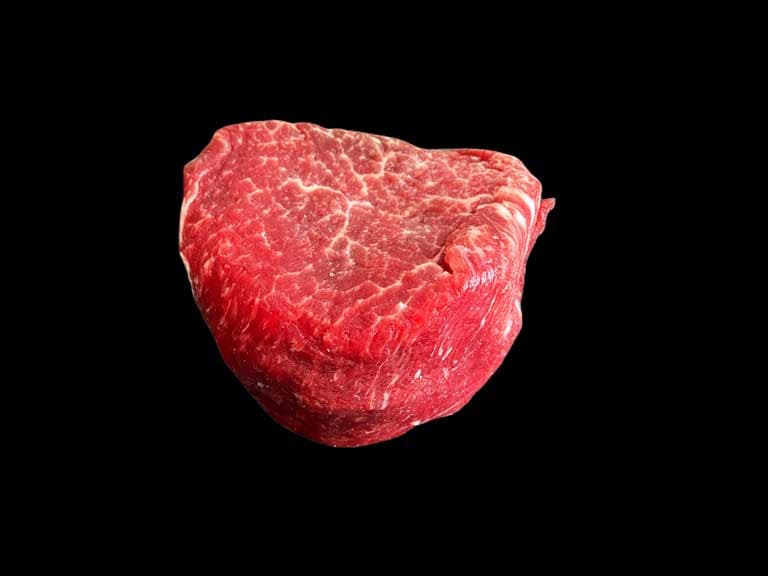
The opposite of a ribeye when it comes to fat. Filet mignon is very lean with a mild flavor, but it’s incredibly tender (the most tender cut on the cow). If you want an extremely soft, buttery texture, this is the one. A great choice for special occasions.
Strip Steak (New York Strip)

A solid middle ground between ribeye and filet mignon. It has a moderate amount of fat (depending on the beef grade), is tender, and has a stronger beefy flavor. It’s an excellent choice if you want something between a fatty cut and a lean one. Great for casual dinners.
Porterhouse Steak

A large bone-in cut with two steaks in one: strip steak on one side and filet mignon on the other. You get both tenderness and a beefy flavor in the same piece. It also looks impressive on the plate, making it a good pick for special occasions.
T-Bone Steak
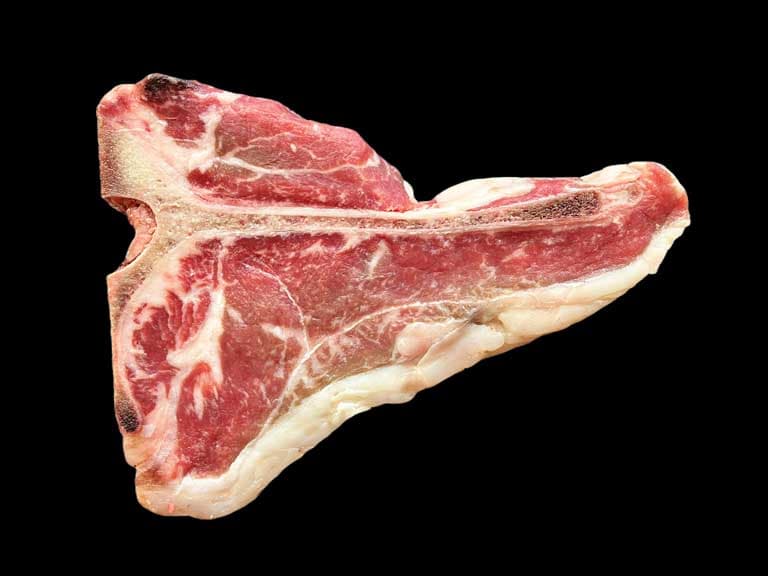
Very similar to a porterhouse, but the filet section is smaller. According to USDA guidelines, the filet must be at least 1 1/4 inches (3.175 cm) wide for the cut to qualify as a porterhouse. Anything smaller is considered a T-bone (see the photo below). Unfortunately, many restaurants treat the two cuts as the same, but technically, they’re different. If you enjoy filet mignon, go with the porterhouse; it should have a noticeably larger tenderloin section.
All the cuts mentioned above work for any occasion (date nights, celebrations, business dinners, or something more casual).

Now that you know the most common cuts you’ll see at restaurants, ask yourself one simple question: Do you like fat in your steak, or do you prefer something lean? Your answer will help you choose the right cut.
- If you don’t like fat at all, go with filet mignon. It’s very lean and extremely tender.
- If you want a leaner option but not completely fat-free, choose a leaner strip steak or a leaner porterhouse/T-bone (both have a strip steak on one side of the bone and a filet on the other).
- If you enjoy fatty, rich, flavorful meat, the ribeye won’t disappoint you. It’s one of the fattiest and most flavorful cuts. A well-marbled strip steak is also a great alternative.
Of course, there are many other types of steak, but to keep things simple, I focused on the most common ones you’ll find at most restaurants. If you want to explore more, check out my article: The Best Cuts of Steak – Ranked from Best to Worst.
Bone-In vs. Boneless Steak

The bone doesn’t change the steak’s flavor. It just makes the steak look more impressive, which is great for a special dinner. Many of the cuts I mentioned earlier come in bone-in versions with different names, but the flavor is the same. For example, a tomahawk or cowboy steak is simply a ribeye with the long bone attached.
Now that you’ve picked your cut, it’s time to choose your preferred doneness.
2. Choose the Steak Doneness
You’ve probably seen charts showing five levels of doneness, but there are actually six: blue, rare, medium-rare, medium, medium-well, and well-done. If you want to learn more about each one, check out my Steak Doneness Guide. But to keep it simple here:
If you’re completely new to steak, start with a medium filet mignon or ribeye. It’s a safe, balanced starting point. From there, decide what you want next time: fattier, leaner, more cooked, or less cooked.
If you already feel more confident, here’s what I recommend based on the cut:
- For fatty, well-marbled cuts: Steaks like ribeye, well-marbled strip steak, or porterhouse/T-bone taste best at medium-rare (towards medium). That’s the doneness most steak lovers prefer, and it’s the one I personally choose for fatty cuts.
- For very lean cuts: Cuts with almost no marbling, like filet mignon, can be ordered rare, but I don’t recommend that if you’re new to steak. Rare steak is something you choose only if you know exactly what to expect.
- If you prefer your steak cooked more (medium-well or well-done): Choose a fattier cut. Fat helps the meat stay more tender and juicy at higher levels of doneness. Good options include ribeye, outside skirt steak (not inside skirt), a well-marbled strip, or a flat iron steak. These cuts handle higher doneness much better than lean cuts like filet.

If you’re new to steak, don’t order it blue rare or rare. There’s a very high chance you won’t enjoy it, especially blue rare (very few people actually prefer it that way). Of course, you can order your steak however you like, but remember that once you go past medium-rare, the steak starts to lose juiciness and tenderness. As the steak cooks past medium, it becomes drier, chewier, and, in some cases, even a bit rubbery, especially when cooked to well-done.
In general, most people who eat steak regularly stick to medium-rare or medium. That’s where you get the best balance of tenderness, flavor, and overall texture.
3. Premium Steak Options
Some restaurants also offer special types of beef. Here are the most common ones you might see on the menu:
Dry-Aged Beef
Because of how beef is processed, you technically can’t buy “fresh beef” that hasn’t been aged. Beef is almost always aged, either dry-aged or wet-aged. Wet-aged is the most common method, and if the menu doesn’t say anything, it’s almost always wet-aged. From your point of view as a customer, the differences mainly come down to meat flavor, tenderness, color, and price.
If you’ve never ordered steak at a restaurant before, it’s safer to choose wet-aged beef. Its flavor is mild, almost always very close to that of beef aged for only a few days – basically what most people would consider “fresh beef”. Depending on how long it’s aged, wet-aged steak can be noticeably more tender, but it doesn’t develop any strong or funky flavors, so it is a good, safe choice for beginners.
Dry-aged steak is a different experience. It’s usually aged for a few weeks (30 to 60+ days), which gives it a deeper, richer, nutty flavor with a bit of funk. Many people love it, but if you’re not into blue-cheese-like flavors, you might not enjoy it. Dry-aged steak is also more tender than beef aged for only a few days and has a slightly different color once cooked. At medium-rare, it looks less pink on the inside.
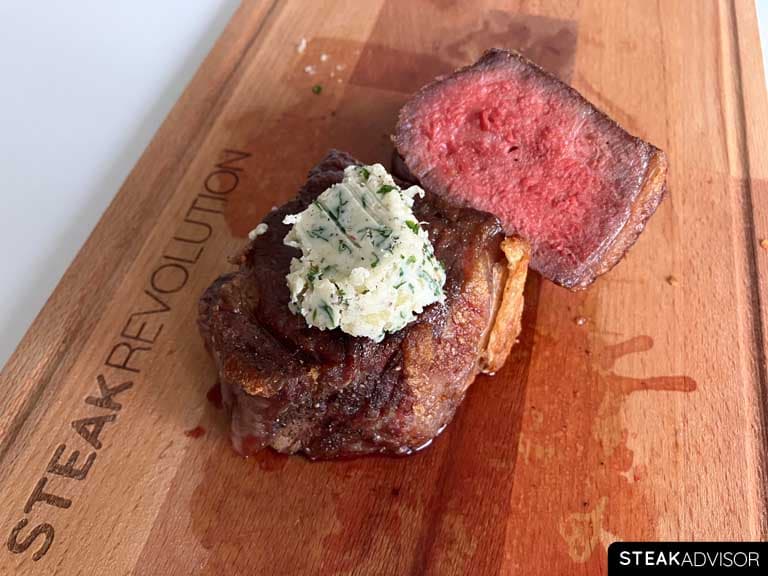
Is dry-aged steak worth the extra money? If you’re in the mood for something special and you like bold flavors, dry-aged steak is worth trying at least once. For a regular dinner, I usually stick to wet-aged. Dry-aged is great, just not something I’d choose every single time.
If you want to learn more about how wet-aging and dry-aging work and how they affect flavor and price, check out my article: Wet-Aged vs. Dry-Aged Beef.
Wagyu Beef
Wagyu is considered one of the highest-quality beef types in the world thanks to its incredible marbling (fat content) and melt-in-your-mouth texture. When it’s cooked properly and the fat melts, the meat becomes almost buttery, very juicy, and very rich. It’s a completely different experience compared to regular beef, and something every steak lover should try at least once.
That said, if you’re ordering steak for the first time, I’d recommend starting with a regular beef. If you find out you like fattier steaks, then give Wagyu a try next time.
Wagyu is super rich and extremely fatty. It’s not the kind of steak most people eat a full portion of. It’s better to share it with friends as a special treat. Even if you enjoy rich cuts of beef, the fattiness of Wagyu can still surprise you.
To put the marbling into perspective: even if you’ve had a high-quality steak, Wagyu is on a completely different level. To see the difference, just look at the photos below. The first one is a choice-grade ribeye, and the second one is an A5 Japanese Wagyu ribeye. The marbling in Wagyu is on a whole other level.


Just keep in mind that there are different types of Wagyu, and the quality can vary depending on the breed, grade, and where it comes from. If you want to learn more about what makes Wagyu special, how Japanese and American Wagyu differ, and how to choose the right one, check out my Wagyu Beef Ultimate Guide. I cover it all there.
Not sure what I mean by “marbling”? I’ve got a separate guide for that too: What is Marbling in Steak.
4. Choose the Right Side Dishes
- For sides, you can’t go wrong with classics like baked potatoes, mashed potatoes, steak frites, grilled broccolini or other vegetables, fried onions, or a simple fresh salad.
- As for sauces, garlic butter, mushroom, peppercorn, or chimichurri are all great choices. What works best often depends on the cut, so if you’re unsure, feel free to ask the waiter what pairs well with your steak.
And one more tip: if you’re ordering a really good steak with plenty of natural flavor (such as ribeye or well-marbled strip), go easy on the sauces and extras. Sometimes keeping it simple is the best way to enjoy it. If you want to enjoy a sauce, choose a milder cut like filet mignon – it pairs great with buttery or creamy sauces.

The Bottom Line
When you’re ordering a steak, make sure the size matches your appetite. Too big and you’ll leave half of it on the plate, too small and you’ll still be hungry. Once you know what you want, just place your order. If you’re unsure about anything, ask the waiter. Enjoy your meal.